



Short Summary: Tarantula Substrates
The right substrate is essential for tarantula health, humidity control, and burrow stability. The most reliable mix combines compost, peat moss, and coco fiber in equal parts, offering moisture retention, mold resistance, and strong burrow support. Adding sphagnum moss boosts local humidity for tropical species. While arid tarantulas do fine with just coco fiber or compost, avoid unsafe options like sand, aspen, or gravel. Branded pre-mixed substrates are often overpriced and unnecessary compared to a DIY blend. Natural forest soil can work if parasite-free. Ultimately, a safe, balanced substrate recreates your tarantula’s natural habitat and supports healthy behavior.
Introduction: Why Substrate Choice Matters
When it comes to keeping tarantulas, substrate is more than just dirt at the bottom of an enclosure. The right soil mix directly affects humidity levels, burrow stability, and ultimately the overall health and behavior of your spider. A poorly chosen substrate can lead to collapsed burrows, unsafe humidity conditions, or even stress for the animal. A well-balanced mix, on the other hand, ensures your tarantula feels at home and can exhibit its natural behavior without issues.
How Substrate Influences Humidity
One of the most important aspects of substrate selection is how it retains and releases water. Different soil types vary in how long they hold moisture, how quickly they dry out, and how they interact with air circulation in the enclosure.
- Compost: Holds moisture moderately well and provides a natural earthy smell. Great for enclosures where stable humidity is important, though it may compact over time.
- Peat moss: Excellent at retaining moisture. It creates a humid microclimate, which is perfect for species from rainforests. However, it can shrink and pull away from the enclosure walls as it dries out.
- Coco fiber: Holds water well but also allows airflow, preventing mold in most cases. It is lightweight and widely available, making it a favorite for many keepers.
- Sphagnum moss (optional addition): Perfect for raising local humidity levels. Not ideal as the sole substrate but a great supplement for targeted moisture.
By mixing these substrates, you can fine-tune humidity levels to mimic your tarantula’s natural environment.
Why Substrate Choice Matters for Burrowing
Besides humidity, burrow stability is a critical factor. Tarantulas that dig deep require compactable soil that holds its shape. Loose or sandy mixes tend to collapse, creating dangerous situations for the spider.
- Compost and peat moss provide density and compaction.
- Coco fiber adds fluff and prevents the substrate from becoming too heavy.
- The ideal combination (1:1:1 compost, peat, and coco fiber) offers both moisture retention and strong burrow walls. This is my go-to recommendation for most setups.

Basic Substrate Ingredients
Coco Fiber
Made from coconut husks, coco fiber is lightweight, decently mold-resistant, and easy to source. It holds moisture well but can become too fluffy if used alone, leading to poor burrow stability. Coco fiber is usually sold in two different formats: bagged, or dried and compressed as bricks. For the latter, you must soak the bricks in water for a certain amount of time, according to the instructions. This means, if you want to have dry substrate handy: either buy the bagged version, or keep in mind that you have to let the coco fiber dry out for a while after soaking.
Peat Moss
A classic choice with excellent water retention. It compacts well, making burrows sturdy. Downsides include shrinkage when drying out, which may leave gaps at the enclosure edges. Keep in mind that peat moss is harvested from peat bogs, which are unique wetland ecosystems that store vast amounts of carbon. Large-scale extraction destroys these habitats, releases significant greenhouse gases, and threatens biodiversity, making its use ecologically controversial.
Compost
Nutrient-rich and naturally textured, compost adds realism to an enclosure. It holds humidity decently but can vary in quality depending on the source. Always ensure it’s pesticide- and fertilizer-free. Adding compost to the substrate mix provides an nutrient-rich environment that supports clean-up crews like springtails, giving them a natural food source and helping maintain a balanced micro-ecosystem in the enclosure.
Sphagnum Moss
Best used as a top layer or directly mixed into the substrate for extra humidity. Great for tropical species but not necessary for arid enclosures. Sphagnum moss can also be just added decoratively.
Suboptimal and Unsafe Substrate Choices
Not every material works. Some are even dangerous.
- Sand: Offers no burrow stability. Although, a little sprinkle of sand on your substrate can absolutely enhance the optics of your enclosure.
- Aspen bedding: Designed for reptiles and rodents, not spiders. It dries out too fast and doesn’t compact. It might also contain sharp splinters. One could argue that it’s not even that well suited for reptiles, however it can be changed out easily and makes spot-cleaning easy.
- Gravel, wood chips, or decorative stones: Unsafe and prevent natural burrowing.
Avoid these if you care about the safety of your tarantula.
Ready-to-Use Substrates
Pet stores and online shops often sell pre-mixed substrates marketed specifically for tarantulas and invertebrates. While convenient, they are often overpriced and rarely superior to a simple DIY mix. Most contain coco fiber as the main ingredient. You don’t need to waste money on branded mixes when a homemade blend works better.
DIY Substrate Mixing: The 1:1:1 Ratio
Why mix your own substrate? Because it gives you control. A balanced blend ensures proper humidity and burrow stability without the downsides of using a single ingredient.
What You Need:
- Compost (untreated, chemical-free)
- Peat moss
- Coco fiber
- Optional: Sphagnum moss
How to Mix:
- Take equal parts of compost, peat moss, and coco fiber.
- Mix thoroughly until the blend looks uniform.
- Add a small amount of sphagnum moss in areas where humidity should remain higher (like near a hide).
This mix has proven to hold humidity well while providing excellent burrow stability. It also resists mold and compaction when maintained properly. Add springtails to improve substrate longevity and reduce the risk of mold build-up.
For Dry Enclosures
Not every tarantula needs high humidity. For arid species, a simpler substrate is enough. Coco fiber or compost alone works perfectly well. Just keep a water dish available and avoid over-watering.
Substrate Shrinkage: What to Watch Out For
Both peat moss and compost can shrink as they dry. This may create gaps between the soil and enclosure walls. While harmless in most cases, feeder animals like to hide in those gaps, and it’s really hard to get them out of there. Also, it doesn’t look very nice. Regularly re-hydrate the substrate to prevent this problem.
Drainage Layers: Necessary or Not?
Some keepers use drainage layers (e.g., clay balls at the bottom of the tank) to help with moisture regulation. While this works for bioactive or heavily planted tanks, it’s not strictly necessary for tarantulas. Most tarantula enclosures do fine with just the right soil mix and proper watering intervals. Use a drainage layer only if you plan on adding live plants that need consistent root hydration.
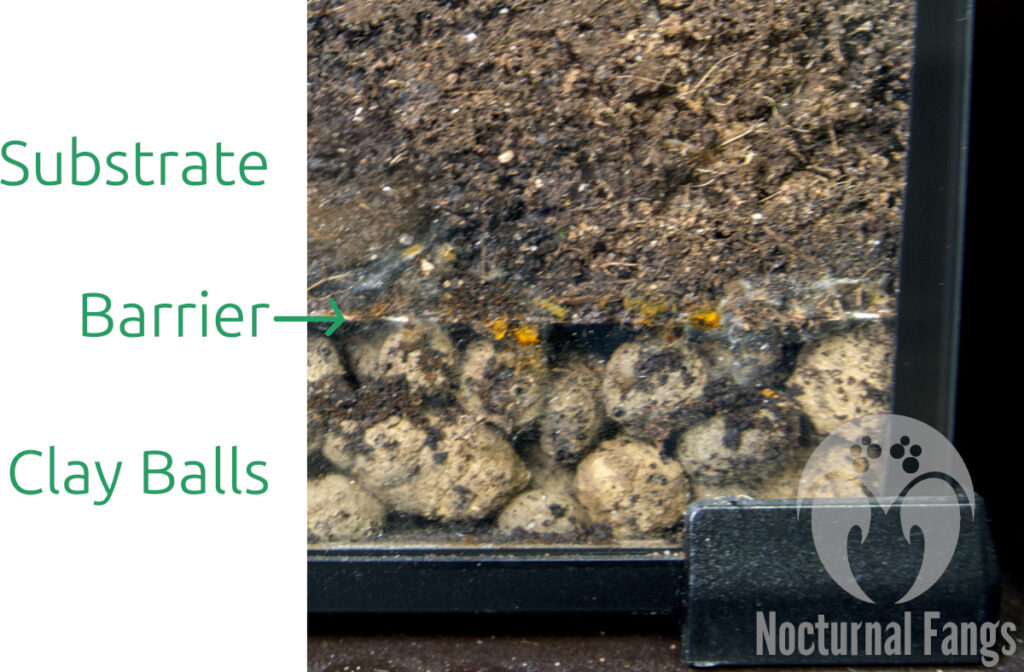
How to set up a drainage? We need three layers:
- We start with a layer of drainage material, e.g. clay balls or coarse gravel. A depth of 2 to 3 cm (approx. 1 inch) is sufficient.
- Then we add a separation layer that prevents the soil from mixing with the drainage material. Anti-mosquito mesh is a solid option here, preferably made of aluminium.
- Finally, we can add the substrate on top, as we would usually do.
Natural Alternatives: Forest Floor Soil
If you want the most natural setup possible, you can collect substrate from your local deciduous forest. Deciduous forests only, as coniferous trees and their needles often contain aromatic compounds, which should be avoided.
This substrate is often rich, stable, and already biologically active. The critical part is ensuring it’s free from pesticides, fertilizers, or parasites. Baking the soil at low temperatures or freezing it for several days can help reduce the risk of contamination.
Conclusion: The Perfect Substrate Mix
Substrate is the foundation of every tarantula enclosure. Choosing the right soil determines humidity control, burrow stability, and overall enclosure health. While coco fiber, peat moss, and compost each have their strengths, a 1:1:1 DIY blend provides the best all-around results. Add sphagnum moss when extra humidity is needed, and skip overpriced branded mixes. For arid species, a simpler setup works just fine. Whether you go DIY or collect natural soil from the forest, always ensure the substrate is safe, stable, and suited to your tarantula’s natural habitat.
By focusing on substrate quality, you not only support your tarantula’s well-being but also recreate a slice of its natural world inside your enclosure. That’s where the true beauty of the hobby lies.
Share this page
Enjoyed this page?
DIY Tarantula Backgrounds: How to Build Custom Rock Walls for Your EnclosureIntroduction: Why Add a Background? A background in your tarantula enclosure does more than just make it look good. Sure, it adds that wow-factor when people look at your setup, but it also gives your spider new climbing and hiding opportunities. It makes the enclosure look like a slice of nature rather than a sterile box. Every keeper who builds one of these eventually realises that it changes the entire feeling of the enclosure. A flat glass wall becomes a vertical playground for arboreal species and a comforting backdrop for terrestrials. And: it is fun to build. It is one of those DIY projects where you can get your hands dirty (literally) and create something that feels like your own. So, whether you want to give your spider more climbing enrichment or you just want an enclosure that looks like it came straight from a rainforest documentary, let us get …