



Do You Need a Separate Tarantula Room? Keeping Tarantulas in Shared Living Spaces
Last updated on by NF-Stefan
When you watch your favourite tarantula YouTuber or spend time reading through online communities, you will quickly notice that many keep their tarantulas in a separate room. Sometimes this is done to maintain a stable room climate, sometimes simply to keep other pets out. And this brings me directly to the topic of today’s post: is it bad practice not to have a dedicated tarantula room?
I do not think so. Let me explain why.
Why Keep a Separate Tarantula Room?
One major reason for having a separate tarantula room is to reduce interference from other pets, most commonly cats or dogs. We all love our furry companions, but they can pose a real risk to tarantula enclosures. Cats in particular are notorious for knocking things off shelves. While their efforts are often unsuccessful with large, adult-sized enclosures, sling enclosures are much more vulnerable.
If a cat manages to knock an enclosure off a shelf, the consequences can be serious. There is a risk of injury to the pet, and in most cases, a high risk of death for the tarantula. This is obviously a situation we want to avoid.
Another good reason for a separate room is climate control. If you want to maintain a slightly warmer or more stable temperature than in the rest of your living space, dedicating a room to your tarantulas can make this much easier.
Personally, however, my tarantula shelves are a central decorative element in my living area, and I do not want to separate them into another room. At the same time, I live with two cats who are just as mischievous as they are cute. So how do I make this work? Let us talk about that.
How I Make It Work Without a Separate Room
I currently use two main tarantula spaces: a dedicated tarantula shelf and the top of a cabinet.
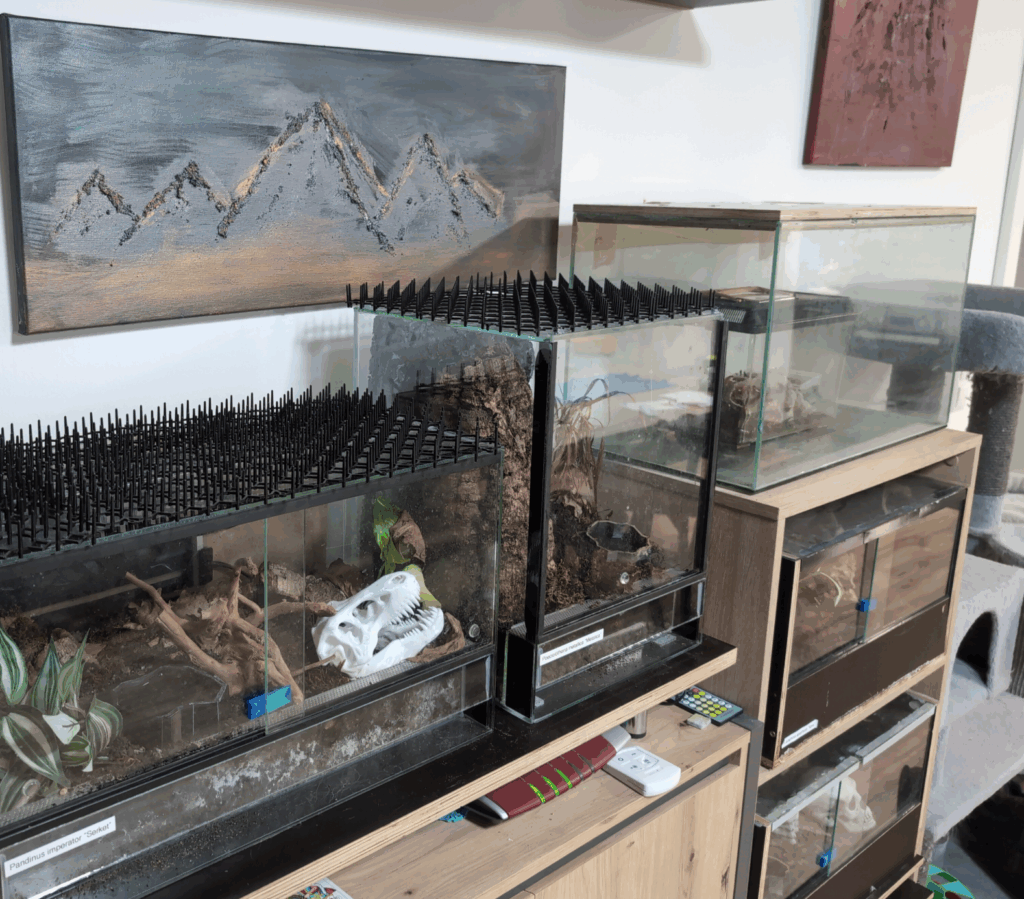
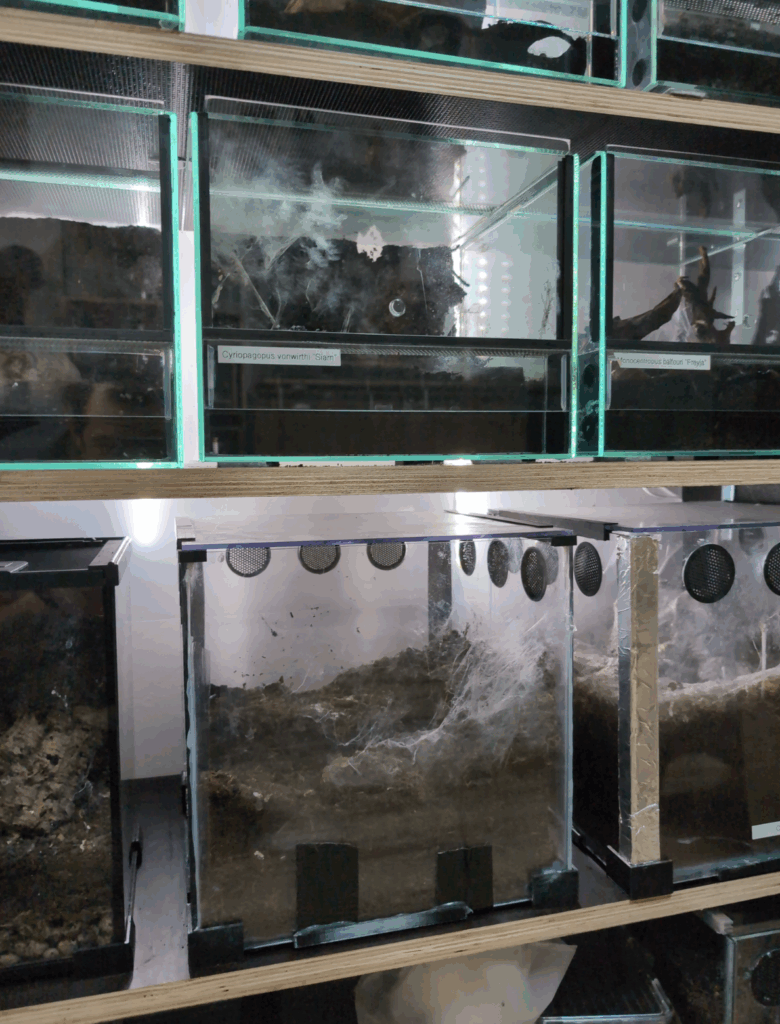
For the shelf, the main goal is to prevent access to areas a cat could reach. I make sure that the enclosures are packed tightly together. If there is any free space between enclosures or behind them, I fill it with something solid, such as a spare enclosure. This prevents my cats from getting behind the enclosures or trying to squeeze into gaps.
On top of the cabinet, I only place my heaviest enclosures. These are positioned very close to the wall, so there is no space for a cat to get behind them. Additionally, since this cabinet is next to a cat tree, I added plastic cat deterrent spikes on top of the enclosures. They are not pretty, but they are effective. The cats still occasionally step onto the enclosures, but they cannot run or jump across them.
In general, heavier enclosures are a big advantage in shared living spaces. Glass enclosures, especially adult-sized ones, are much harder for cats to knock over than lightweight plastic setups. With these measures in place, I have had good experiences so far, and nothing major has happened. Knocks on wood.
Bottom line: your pets are curious, whether they are cats, dogs, rabbits, raccoons, or anything else. If you do not have a separate tarantula room, do not leave safety to chance. Think like your pet and ask yourself: How could I get on top of this enclosure? How could I get behind it? How could I knock it over? Then design your setup to make those scenarios impossible.
Higher shelf levels are usually a safer option, especially when they are tightly packed and well thought out.
Thanks for reading, see you again soon.
Keep it simple, stay curious, and let your spiders be spiders.
Stefan
Share this post
Liked this article?
Tarantula Enrichment: Simple Tips for a Better EnclosureIt’s been a while since the last post…today I want to talk about enrichment for your tarantula, and why your enclosures shouldn’t just be a box of dirt. Tarantulas are low-maintenance pets, and while it is true that they do not require daily attention, that does not mean they cannot benefit from a stimulating environment. Enrichment is a way to encourage natural behaviors, reduce stress, and promote overall well-being. In this post, I will share some practical and creative ways to enrich your tarantula’s enclosure, ensuring your eight-legged friend stays happy, healthy, and engaged. Why Enrichment Matters In the wild, tarantulas face a variety of challenges: hunting for prey, navigating complex environments, and avoiding predators. While captive tarantulas do not need to worry about survival, they still retain their natural instincts. A barren enclosure can lead to boredom, for you and for your tarantula (if they were able to feel …
Leave a comment