



Foreword
The health and well-being of our eight-legged friends is important to every keeper, which is why accuracy matters in an article about emergencies. If you are an experienced keeper or have a background in invertebrate medicine and notice anything that could improve the information in this guide, I welcome your suggestions. You can reach me at contact@nocturnalfangs.com.
Disclaimer: This guide is based on current knowledge and practical experience, but it is not a substitute for professional veterinary advice.
What Counts as an Emergency?
Not every behavior is dangerous, but knowing how to react to tarantula emergencies is part of good husbandry. Many new keepers panic the first time their spider stops eating, hides for weeks, or flips onto its back. The truth is that most of these situations are normal parts of tarantula behavior. However, there are a few circumstances where quick action can make the difference between life and death. The goal of this guide is to help you separate true emergencies from natural behavior, and to give you practical steps to respond without making things worse.
Introduction
Not every odd behavior means your tarantula is in danger or dying, but knowing the difference between normal and true emergencies is vital. This guide covers the most common problems tarantula keepers face, including fasting, molting issues, lethargy, injuries, and constipation (impaction). Practical checklists help you assess when action is needed, and clear instructions explain what to do in critical cases like dehydration or an abdominal injury. You will also learn how to prevent emergencies through proper husbandry, safe enclosures, and consistent hydration. Handling methods such as the “spider grip” are addressed, with clear warnings about risks for both spider and keeper. With the right knowledge, you can respond calmly and keep your tarantula safe
Behavior That You Might Encounter
Refusing Food
A tarantula that refuses food is rarely in immediate danger. Fasting can happen for several reasons:
- Pre-molt: Many tarantulas stop eating weeks or even months before shedding.
- Environmental stress: Incorrect temperatures or humidity can reduce appetite.
- Overfeeding: Sometimes your spider simply isn’t hungry.
One of the best indicators of your tarantula’s health during a fast is the abdomen. As long as it remains plump and proportional to the carapace, there’s no need to worry. If the abdomen becomes significantly smaller than the carapace or shows signs of deflation and wrinkling, that’s a red flag for dehydration or malnourishment. In such cases, double-check that clean water is always available and review husbandry conditions immediately.
What to do: Remove uneaten prey after 24 hours, check husbandry conditions, and be patient. As long as the abdomen looks plump and hydrated, a tarantula can go months without food.
On Its Back
One of the biggest beginner mistakes is assuming a tarantula lying on its back is dead. In fact, this is the classic molting position.
- Normal: The spider flips over, stays motionless, and begins pushing out of its old exoskeleton.
- Emergency: Only if the spider is stuck in the molt for many hours, showing no progress.
Although most tarantulas molt on their back, some individuals may molt upright. This can look unusual, but it is not automatically an emergency as long as the spider is making progress. However, upright molts carry a higher risk of complications, such as legs getting stuck in the old exoskeleton, so it is important to observe carefully without interfering.
What to do: Do not disturb a molting tarantula. Provide stable humidity, darkness, and peace. Maybe play some Beethoven for your tarantula (just kidding, of course). Intervening mid-molt is usually more harmful than helpful.
Lethargy
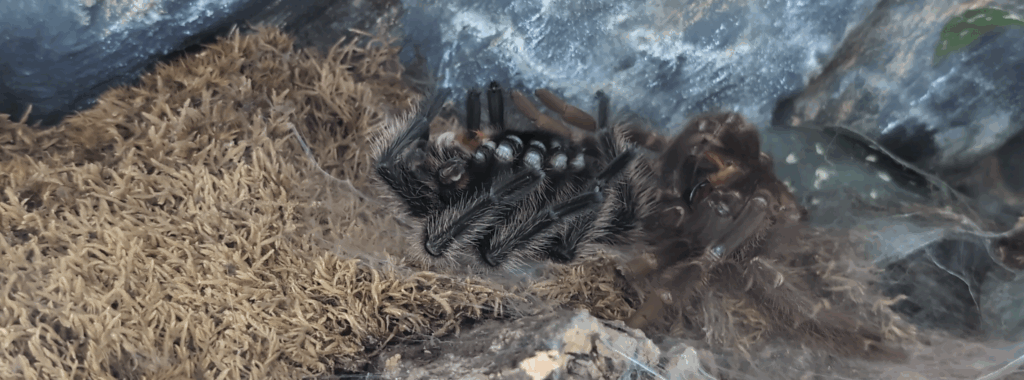
A tarantula that appears sluggish, unresponsive, or collapsed in an unusual position may be in trouble.
- Possible causes: Dehydration, stress, extreme temperatures, or internal illness.
- The “Death Curl”: If the legs are tightly tucked underneath, this is a critical emergency often caused by dehydration.
What to do: Offer fresh water immediately. If the tarantula cannot drink on its own, you can carefully place its fangs and mouthparts into a shallow water dish so that it can rehydrate. Take care not to submerge the book lungs, as this can suffocate the spider. Avoid the use of ICUs (small, damp recovery containers with paper towels), as these often create more stress and harmful high humidity, low ventilation environments rather than helping.
Common and Less Common Injuries
Injuries can occur from falls, enclosure hazards, or fights with prey. The most dangerous are injuries to the abdomen, since even small ruptures can cause fatal hemolymph loss.
- Minor injuries: Small cuts, which may clot naturally.
- Major injuries: Visible bleeding or open wounds, that require active care.
What to do: For minor bleeding, apply cornstarch to seal the wound. For major abdominal rupture, there is unfortunately little that can be done, but quick sealing attempts may buy some time. Prevention is always better than cure.
Loss of Legs
Leg loss looks alarming, but for tarantulas it is usually not life threatening. A leg can be dropped as a stress response or due to an injury, and the wound often seals quickly on its own. Tarantulas are remarkably resilient and can continue to walk, climb, and even hunt with one or more legs missing. During the next molts, the lost limb will gradually regenerate in size and function.
What to do:
If a leg is actively bleeding, use a tiny amount of cornstarch or flour to help seal the joint. Make sure the spider has access to clean water and keep the enclosure conditions stable. Avoid unnecessary handling. In most cases, the tarantula recovers without further problems and will regenerate the lost limb over the next one or two molts.
Loss of Other Appendages (Molting Issues)
Sometimes a failed molt can lead to the loss or partial loss of important appendages such as chelicerae, spinnerets, or pedipalps. While losing spinnerets is usually insignificant for the spider’s overall survival, the loss of pedipalps or chelicerae requires closer attention. Pedipalps help with handling food, and chelicerae are essential for feeding, so damage in this area can influence the spider’s ability to eat.
What to do:
If your tarantula loses pedipalps or spinnerets, monitoring is usually enough. These structures often regenerate gradually over the next one or two molts. Keep the enclosure clean, avoid unnecessary disturbance, and let the spider recover at its own pace.
If your tarantula loses one chelicera and can still hunt and eat on its own, keep a close eye on feeding attempts. As long as the food intake remains regular and the spider shows normal behaviour, patience is your best approach.
If your tarantula loses both chelicerae or if it struggles to subdue prey, you may need to assist with feeding. This means offering pre-killed prey, cutting it open, and placing small pieces close to the mouth area so the spider can access the soft tissues. Make sure the enclosure is quiet and dim during feeding attempts, since stress can make the situation worse. Assisted feeding is not guaranteed to work, but it can give the spider a chance to recover until the next molt, where chelicera regeneration may begin.
Constipation (Impaction)
Another rare but serious emergency is impaction, also known as constipation. This happens when the tarantula cannot expel waste properly.
Signs to look for:
- The spider consistently refuses food without other clear pre-molt indicators.
- A visible buildup of dried feces or blockage around the spinnerets (the white stuff).
- Swelling near the rear of the abdomen combined with lack of fecal output.
(It’s important not to confuse normal fasting with impaction. Only clear and repeated signs should raise concern.)
What to do: If you see dried feces blocking the spinneret area, you can very gently use a damp Q-tip to soften and remove the blockage.
- Make sure the tarantula has constant access to fresh water, as dehydration can worsen the condition.
- If impaction persists despite these steps, unfortunately options are limited, but keeping the enclosure clean and the tarantula hydrated gives it the best chance of recovery.
Parasites, Diseases and Poisoning
Mites
Harmless mites are common in humid enclosures and often arrive with feeder insects or substrate. These detritivore mites feed on waste and leftover prey, and they pose no threat to your tarantula. They look annoying, but they are simply part of a living micro ecosystem. Parasitic mites, however, are a completely different situation.
How do you tell the difference between non-harmful and parasitic mites? Parasitic mites very often gather around the mouth parts and the book lungs of the tarantula where they can irritate the spider and interfere with feeding. They are unpleasant, but with early action you can still manage the situation.
What to do:
Immediately isolate the tarantula from your other animals to prevent spreading of the mites. If you are comfortable, physically remove the mites from your tarantula with a cotton swab using the spider grip (see below). Move the tarantula to a dry, minimalist enclosure consisting of dry paper towels as “substrate”, a water dish and a hide. Why so minimalist? So that you can easily monitor the condition of the tarantula. Make sure that the temporary enclosure is not too high, this is to prevent falls from height. Mites thrive on moisture. Keep the enclosure clean, well ventilated, and remove prey remains immediately.

Nematodes
Nematodes are a real emergency.
A nematode infection is often fatal. Once the parasites reach the mouth area, the tarantula may produce a white, foul smelling discharge and hold its chelicerae open. The spider becomes unable to eat, cannot properly groom itself, and gradually weakens. By the time visible symptoms appear, the nematodes have usually invaded the internal tissues. At this stage, there is no reliable treatment and survival is extremely unlikely. Many keepers consider nematodes one of the worst threats in the hobby.
What to do:
If you see nematode symptoms, isolate the tarantula and remove all feeder insects. Replace substrate immediately, clean the enclosure thoroughly, and increase ventilation. These steps will not cure the spider, but they help prevent spread to other enclosures. Avoid wild caught prey at all costs, since it is a common source of contamination. Prevention is the only effective defence, which is why hygiene and careful feeder selection matter so much.
Poisoning
Tarantulas are sensitive to chemicals, fragrances, and airborne irritants. Exposure to pesticides, room sprays, essential oils, paint fumes, or contaminated feeder insects can lead to poisoning. Symptoms vary, but often include lethargy, trembling, loss of coordination, or sudden collapse. Unlike mammals, tarantulas cannot metabolise many common household toxins, so small doses that seem harmless to humans can be dangerous for them.
What to do:
Immediately remove the tarantula from the contaminated area and place it in a clean, well ventilated setup with fresh substrate. Offer water and minimise stress. There is no direct antidote for tarantula poisoning, so supportive care is the only option. Review your environment carefully. Even something as innocent as spraying deodorant near an open enclosure can cause problems.
DKS
DKS, also known as Dyskinetic Syndrome, is a disease affecting the nervous system of a tarantula. Tarantulas suffering from DKS show uncoordinated movements, shaking legs, or difficulty walking. It looks dramatic and often leaves keepers worried that the spider is dying. The exact cause is still unclear. Some cases may be linked to toxins, contaminants, or severe stress, while other cases appear spontaneously with no identifiable trigger.
What to do:
Since the origin is uncertain, prevention is again the best approach. Avoid chemical sprays in the room, scented candles, or cleaning products near enclosures. If you suspect DKS, maintain stable and hygienic conditions. Some animals recover, some do not. DKS needs to be treated on a case by case basis.
Preventing Emergencies
Proper husbandry: Most emergencies are avoidable with correct care. Always research species-specific needs for humidity, temperature, and enclosure type.
Use only safe decorations: Avoid sharp rocks, heavy unstable items, or ornaments with small holes that can trap a spider.
Proper enclosure heights: One of the biggest risks for terrestrial tarantulas is a fall inside a tall enclosure. Keep the fall height adequate to avoid injuries.
Mesh lids: Many keepers use mesh lids successfully, but there are occasional reports of tarantulas getting their claws caught and even losing legs. The risk is small but real. If you use mesh, monitor conditions and make sure your spider has safe climbing surfaces.
Handling and the “Spider Grip”
Handling tarantulas is generally discouraged, but there are rare situations where you may need to move your spider directly. Examples are during enclosure emergencies or when providing first aid. The so-called “spider grip” refers to gently pinning the tarantula by placing your thumb and forefinger on either side of the carapace, just behind the eyes.
Risks for the Spider:
- Stress and panic responses can lead to injury.
- A struggling tarantula may fall or lose a leg.
- Pressure applied incorrectly can damage the exoskeleton.
Risks for the Keeper:
- Defensive bites from Old World species, which can be medically significant.
- Urticating hairs from New World species, which may cause irritation to skin or eyes.
- The spider grip should only be used as a last resort when there is no safer option, such as coaxing the tarantula into a container. If you must use it, remain calm, confident, and gentle to minimize risk for both you and the animal.
The Five Most Important Things to Remember
1. Dehydration is the most common and most fixable emergency
Many tarantulas that appear weak, curled, or unresponsive are simply dehydrated. A clean water dish, stable humidity appropriate for the species, and immediate rehydration attempts can save a spider that otherwise looks near death.
2. Most alarming behaviours are normal
Fasting, hiding for months, flipping onto the back, or refusing food during pre molt are not emergencies. These behaviours confuse new keepers, but they are natural and do not require intervention as long as the tarantula remains hydrated and the environment is correct.
3. Injuries to the abdomen are the most dangerous
Small cuts clot, lost legs regenerate, and minor wounds usually heal. Abdominal ruptures do not. Even small openings can lead to fatal hemolymph loss. Prevent falls, avoid tall enclosures for terrestrials, and secure all heavy decorations.
4. Parasites and toxins are rare but often fatal
Harmless mites are common. Parasitic mites and nematodes are not. Nematodes in particular are almost always lethal by the time symptoms appear. Chemical exposure from sprays, essential oils, paints, or contaminated feeders can also cause rapid decline.
5. Intervention is the exception, not the rule
Tarantulas respond poorly to unnecessary handling, force feeding, or dramatic “treatment” methods. Correcting husbandry, providing hydration, and observing calmly are far more effective than attempting hands-on rescue. Most emergencies worsen when keepers panic.
Conclusion
Most situations that seem alarming to new keepers are not true emergencies. Tarantulas are hardy animals that can go long periods without food, stay hidden for weeks, and look alarming when molting. Real emergencies usually involve dehydration, serious injury, or environmental mistakes. By learning how to distinguish the normal from the dangerous, and by keeping your husbandry consistent, you can handle problems calmly and keep your tarantula safe. Prevention, observation, and patience are your strongest tools.
Share this page
Enjoyed this page?
Ultimate Guide to Tarantula SubstratesShort Summary: Tarantula Substrates The right substrate is essential for tarantula health, humidity control, and burrow stability. The most reliable mix combines compost, peat moss, and coco fiber in equal parts, offering moisture retention, mold resistance, and strong burrow support. Adding sphagnum moss boosts local humidity for tropical species. While arid tarantulas do fine with just coco fiber or compost, avoid unsafe options like sand, aspen, or gravel. Branded pre-mixed substrates are often overpriced and unnecessary compared to a DIY blend. Natural forest soil can work if parasite-free. Ultimately, a safe, balanced substrate recreates your tarantula’s natural habitat and supports healthy behavior. Introduction: Why Substrate Choice Matters When it comes to keeping tarantulas, substrate is more than just dirt at the bottom of an enclosure. The right soil mix directly affects humidity levels, burrow stability, and ultimately the overall health and behavior of your spider. A poorly chosen substrate can …