



Tarantula Enrichment: Simple Tips for a Better Enclosure
Last updated on by NF-Stefan
It’s been a while since the last post…today I want to talk about enrichment for your tarantula, and why your enclosures shouldn’t just be a box of dirt.
Tarantulas are low-maintenance pets, and while it is true that they do not require daily attention, that does not mean they cannot benefit from a stimulating environment. Enrichment is a way to encourage natural behaviors, reduce stress, and promote overall well-being. In this post, I will share some practical and creative ways to enrich your tarantula’s enclosure, ensuring your eight-legged friend stays happy, healthy, and engaged.
Why Enrichment Matters
In the wild, tarantulas face a variety of challenges: hunting for prey, navigating complex environments, and avoiding predators. While captive tarantulas do not need to worry about survival, they still retain their natural instincts. A barren enclosure can lead to boredom, for you and for your tarantula (if they were able to feel bored that is). But, enrichment helps replicate some of the complexities of their natural habitat, allowing them to exhibit behaviors like burrowing, climbing, exploring, and anchoring their web to wherever they feel like.
Enrichment also benefits you as a keeper. Watching your tarantula interact with its environment can be fascinating and rewarding. But sometimes this behavior can also be quite frustrating, for instance when your Grammostola sp. burrows their water dish in substrate for the tenth time.
Types of Enrichment
- Substrate: For burrowing species, provide a deep layer of substrate. This allows them to dig and create burrows, which is essential for their sense of security.
- Climbing Opportunities: Arboreal species, such as Avicularia or Caribena, need vertical space. Include branches, cork bark, or other climbing structures to encourage natural movement.
- Hiding Spots: All tarantulas need places to retreat. Cork bark, half logs, or even artificial caves can serve as hiding spots. Position them in a way that creates a sense of security while still allowing you to observe your tarantula.
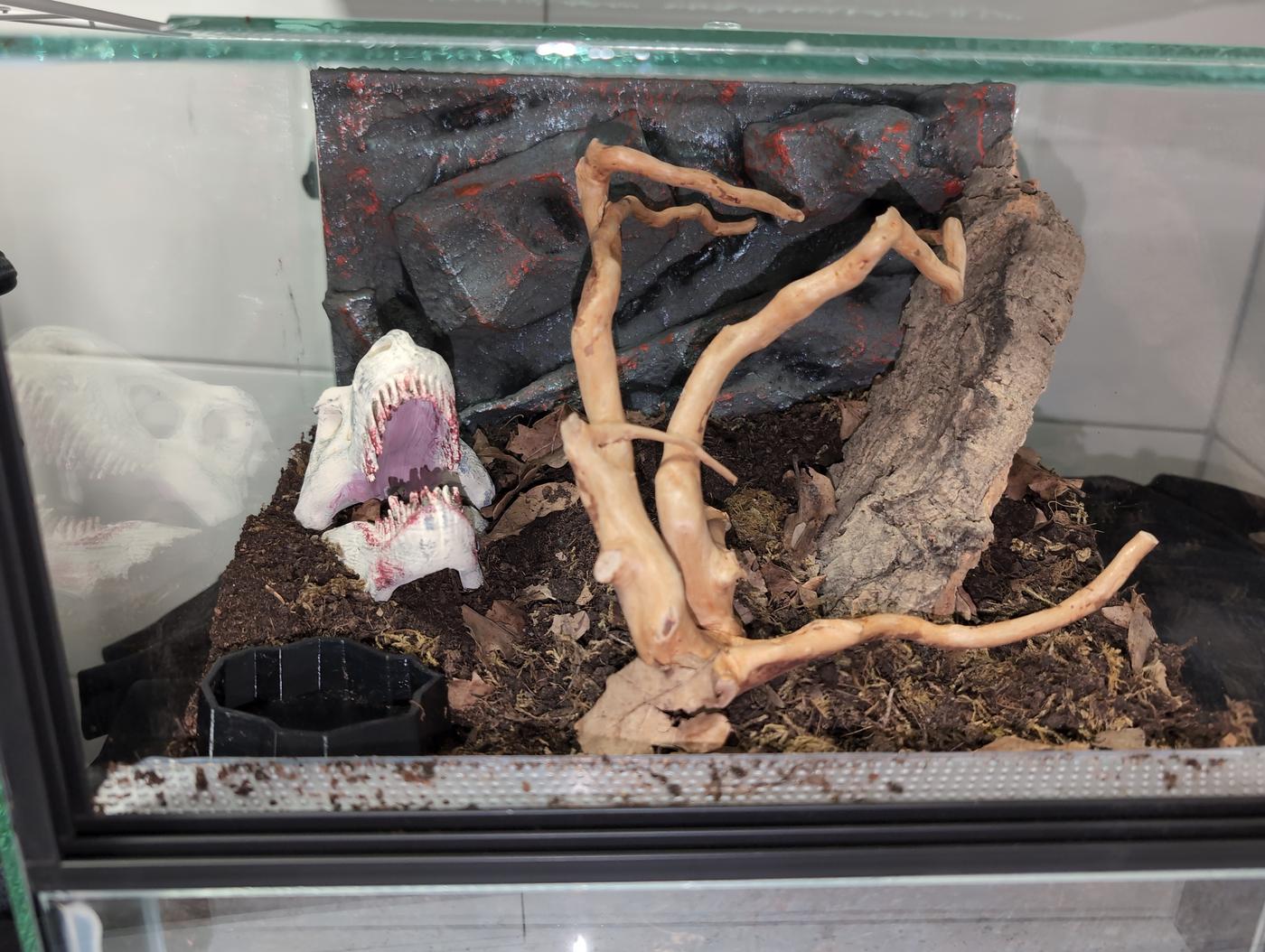
- Textured Surfaces I: Add rough-textured decorations like slate tiles or rough bark. These surfaces can help with molting and provide tactile stimulation. If you feel up to DIY, why don’t you create a custom DIY Tarantula Background?
- Textured Surfaces II: Adding dried leaves or sphagnum moss to the enclosure can create a more naturalistic environment. Tarantulas will often rearrange these materials, which can be entertaining to watch. When a feeding insect crawls over leaf litter, the tarantula will be able to pick up the vibrations.
- Live Plants: If you are keeping a species that tolerates higher humidity, live plants can add both visual and sensory interest. Just make sure the plants are non-toxic and pesticide-free.
- Prey Variety: Offer different types of prey, such as crickets, roaches, or mealworms. This not only provides nutritional variety but also keeps your tarantula mentally engaged. Just be sure that the feeders are gut loaded. Relevant article: Feeding Tarantulas: Feeder Insects, Storage, and Breeding in Detail.
- Hunting Challenges: Instead of simply dropping prey into the enclosure, try using tongs to simulate movement. This can encourage your tarantula to stalk and ambush its prey, mimicking natural hunting behaviors.
- Foraging Opportunities: Hide prey under leaves or in small crevices to encourage your tarantula to search for its food. However, make sure to remove any uneaten prey after 24h.
- Web Anchors: For species that like to web, provide anchor points like small branches, decorative rocks, figurines, etc. This can lead to impressive web structures, especially with species like Chromatopelma cyanopubescens.
- Digging Zones: Create areas with loose substrate where your tarantula can dig and explore. Some keepers even bury small tunnels (e.g. underwater aquarium tunnels) or chambers to encourage digging. Create other zones where your tarantula can’t dig, e.g. by creating a fake rock.
DIY Enrichment Ideas
You do not need to spend a lot of money to enrich your tarantula’s enclosure. Here are a few DIY ideas:
- Cork Bark Tunnels: Use cork bark to create tunnels or caves. You can stack pieces to form a multi-level structure. Glue them together with a hot glue pistol (make sure it’s non-toxic).
- Natural Decorations: Collect items dead wood, grapevine, roots, moss, or small rocks from outside. Just make sure that, again, they are non-toxic to your tarantula. With natural materials, if you put them in a humid enclosure, keep a watch on the natural decoration just in case it starts to mold.
- 3D-Printed Decor: If you have access to a 3D printer, you can create custom decorations like caves, ramps, or even miniature landscapes. I particularly like underwater caves like this (outbound link to thingiverse.com)
Common Mistakes to Avoid
While enrichment is beneficial, it is important to avoid overdoing it. Here are a few pitfalls to watch out for:
- Overcrowding: Too many decorations can make the enclosure feel cluttered and stressful. Aim for a balance between open space and hiding spots.
- Unsafe Materials: Avoid using materials that could harm your tarantula, such as things with sharp edges or toxic plants.
Final Thoughts
Enrichment means creating an environment that fulfills your tarantula’s physical and psychological needs and is stimulating to you, as an observer, and to the tarantula, as the inhabitant. Offer opportunities for exploration, hunting, and natural behaviors to help it thrive.
The goal is not to replicate the wild but to provide an engaging and safe space for natural behavior. Start small, observe your tarantula, and adjust the enclosure based on its and your preferences.
Share this post
Liked this article?
Welcome to Nocturnal FangsHi, thanks for stopping by! I have just launched Nocturnal Fangs, a site dedicated to practical tips, DIY instructions and essential knowledge for tarantula keeping. It is aimed at current keepers as well as anyone curious about entering the hobby. Who knows, maybe I can convince you. My motivation for creating Nocturnal Fangs is simple. Over the years I have heard and read the same questions again and again, so I wanted to build a reliable place that brings all those answers together. The vision behind this project is to develop a clear, beginner-friendly resource for practical tarantula care while growing a supportive community around it. During the first months you will find only a handful of articles, but the site will grow continuously. You can look forward to content such as: and regular blog posts covering many more practical and interesting topics. As I am always learning new facts …
Leave a comment