



Are Tarantulas Bad Pets?
Last updated on by NF-Stefan
Arachnophobia is among the most common specific phobias, so it is not surprising that when you tell someone that you keep tarantulas as pets, they raise an eyebrow. People imagine danger and eight legs that are plotting your demise, hidden in the corner of your room. The reality is far calmer. Tarantulas are low maintenance, quiet, and surprisingly captivating animals that make excellent pets for the right kind of keeper.
Why Tarantulas Are Actually Great Pets
One of the biggest advantages is how little effort they require. A tarantula does not need daily attention, elaborate heating setups, or expensive equipment. Once the enclosure is correctly built, maintenance becomes simple. Sure, if you buy a baby spider (spiderling, in short sling), you will have to re-house it into an adequately-sized enclosure as it grows. But there are plenty of resources out there (e.g. Tom Moran on Youtube), that show you how it’s done. Keep the water dish full, remove leftovers, feed occasionally, and that is it. Many species eat just once per week, and some fast for months during pre-molt without any impact on their health.
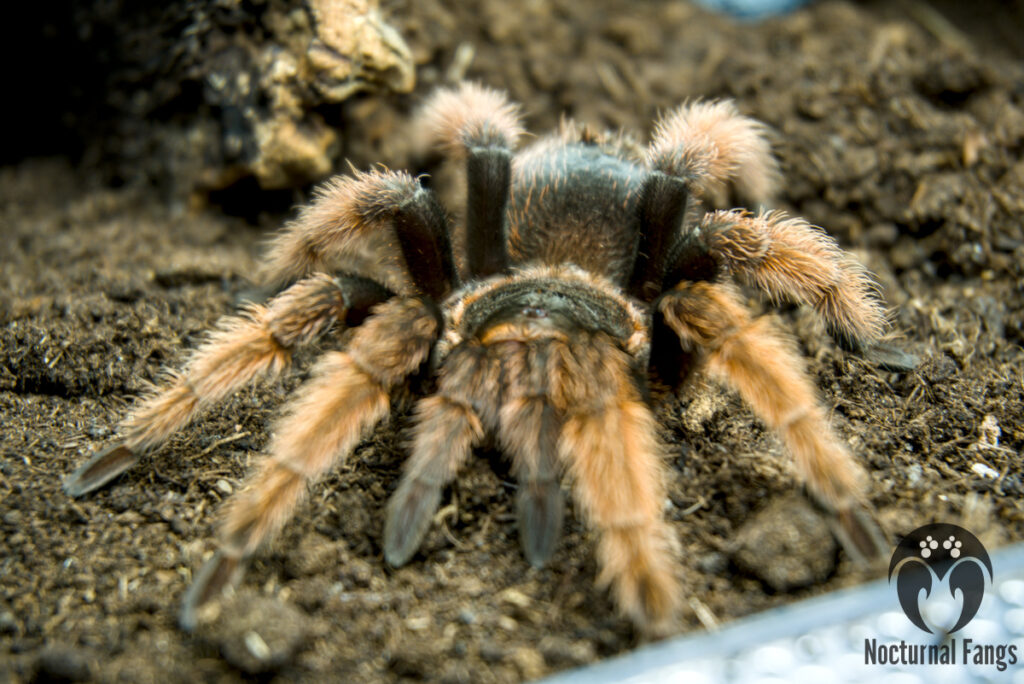
This minimal care also means you can go on vacation or a work trip without stress. Leaving a dog, a cat or most reptiles for a week requires planning. Leaving a tarantula for a week is normal. As long as the enclosure is safe and the water dish is filled, the spider remains perfectly fine. They probably won’t even notice that you’re gone (sorry).
The tarantula hobby also plays a small role in conservation. Captive breeding has reduced pressure on wild populations and created stable lines of many popular species. By supporting captive bred animals, keepers indirectly contribute to reducing illegal collection. Breeding projects also help preserve rare species and maintain healthy genetic diversity within the hobby. For instance, many of the Poecilotheria sp. tarantulas are listed in the ICUN red list under critically endagered (ICUN, accessed 2025-12-09). So while the diversity in the wild is threatened, we in the hobby can do our part to help with the preservation of those beautiful animals.
One part of the appeal is pure fascination. Tarantulas look and behave like something from another world. Their movements, colors, webs, and behaviors are almost alien. Watching a tarantula engineer its burrow or slowly expand its webbing can be surprisingly calming. They offer a window into a very different form of life, one that rewards observation rather than interaction. Also: being able to regenerate lost limbs? If that’s not alien, I don’t know what is.
Safety, Venom, and What to Expect
In many ways, tarantulas are like interactive house plants. They sit still most of the time, they look interesting, and they occasionally surprise you with new behaviour. You do not cuddle them, but you still appreciate them. A well kept tarantula is a living display piece that quietly goes about its business while adding personality to your room.
There is of course the elephant in the room: their venom and their urticating hairs. Their venom can be mildly painful in most New World tarantulas to really painful in many Old World species, and their urticating hairs can irritate skin or eyes if handled carelessly. However, if you give them the respect they deserve, and keep handling to an absolute minimum (I strongly discourage handling for “fun”), then the risk of a painful interaction should be negligible.

So, are tarantulas bad pets? Not at all. They are simple to care for, stress free when you travel, fascinating to observe, and part of a responsible captive breeding community. They may not be the right choice for everyone, but for patient and curious keepers, they make remarkably rewarding companions.
Thanks for taking your time to read, and see you again soon,
~Stefan
Share this post
Liked this article?
Sometimes the Sling Lottery Just Does Not Love You BackMy Unlucky Streak This post was inspired by a recent streak of spiderlings that reached their ultimate molt and, one after another, turned out to be male. Somehow, it feels like I have been especially unlucky lately. I mean, statistically speaking, the chance of getting the desired sex when buying an unsexed tarantula sling is about 50 percent. Yet sometimes it really does not feel like that. I am fairly sure some cognitive bias is at play here, because losses tend to sting more than wins feel good. Since I track every tarantula I own in a database and small web app that I built for myself, I actually have the numbers. Over the last three years, I bought 16 unsexed slings. Out of those, 9 turned out to be males. On top of that, one tarantula I bought at an invert expo here in Austria as a confirmed female …
Leave a comment