



The Right Tools
The right tools make everything easier, safer, and less stressful for both you and your eight-legged companion.
Having the proper utensils at hand means you can feed, clean, and manage your tarantula with confidence instead of panic. And trust me, when your old world tarantula suddenly decides to sprint up the tongs, you will appreciate every extra centimeter of length.
The Essentials
Feeding Tongs
Feeding tongs are your best friend in this hobby. They keep your fingers out of striking distance and make feeding precise and clean. If you want to tong-feed your tarantula, plastic or wooden tongs are the safer choice, as tarantulas can and will sometimes bite into the tongs, and then a softer material is safer for your tarantulas fangs.
Otherwise, go for long steel tongs. The longer the tongs, the more distance you have if your tarantula decides to run up them for a surprise visit. When they do they might want more than just a hug.
Syringe and Squeeze Bottle
A syringe is perfect for adding water to very small enclosures, like spiderling vials, without flooding the substrate. For larger enclosures, a squeeze bottle gives you better control when refilling water dishes or moistening substrate areas. Both are inexpensive, but they save you a lot of frustration and spilled water. Pressurized hand-pump spray bottles can also come in very handy if you have the space.

Catch Cup
If you keep tarantulas long enough, you will eventually meet the great escape artist. That is where the catch cup comes in. It is a simple, clear plastic container used to safely trap and relocate your tarantula without harm. Always have one nearby when doing enclosure maintenance. A sheet of paper, a lid, or even your trusty tarantula journal can serve as a cover to slide underneath the cup.
Tarantula Journal
A tarantula journal is a keeper’s best memory aid. Write down feeding dates, molts, enclosure changes, and general observations. Over time, this simple habit builds a clear record of your spider’s health and behavior. You will start to notice patterns such as pre-molt fasting or changes in activity that might otherwise go unnoticed. It is not only a notebook but also the diary of your collection. It doesn’t necessarily have to be a physical journal, but a simple spreadsheet also does the trick.
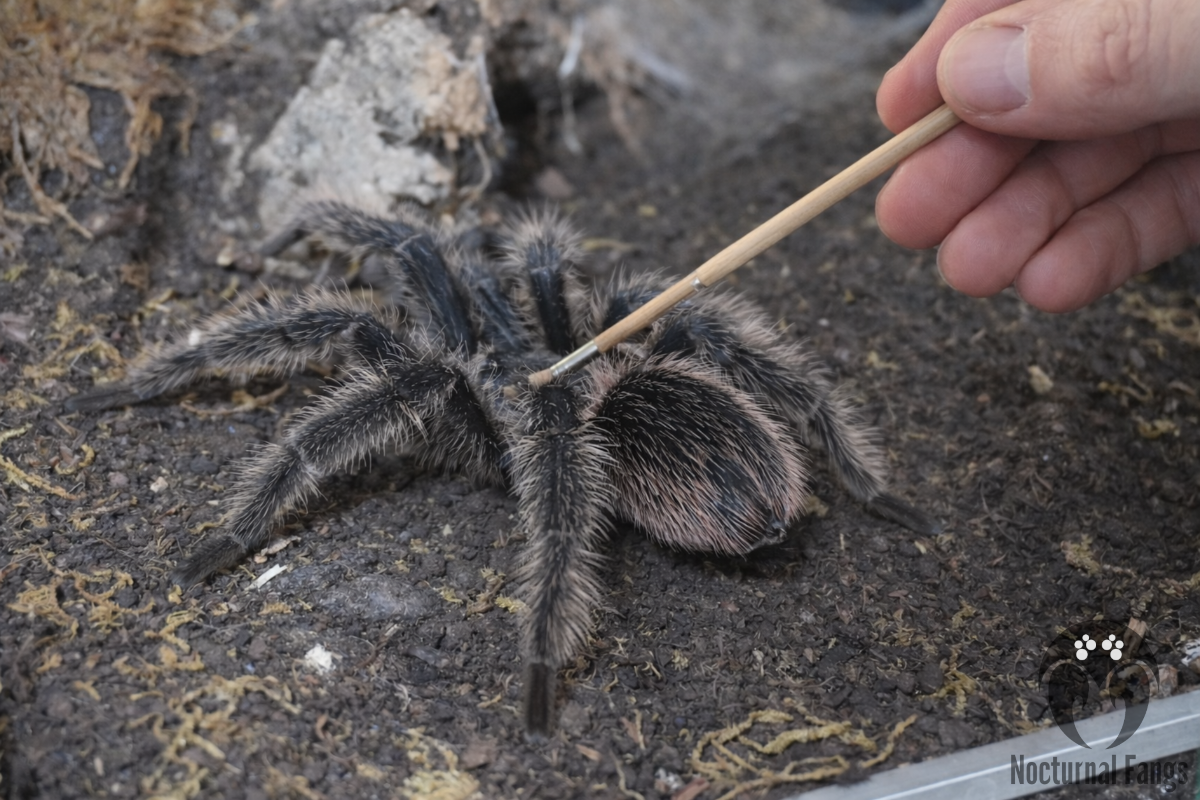
A Poking Stick
Sometimes your tarantulas are just sitting in an inconvenient place. For instance, when it’s feeding time and your tarantula sits in front of the glass door. You don’t want them to escape, that’s why you use a poking stick to gently motivate the animal to move away. This must be something that the tarantula can bite, without hurting itself. I like to use paper straws or a thin long wooden brush. This also comes in very handy during re-housing
Great Additions
Label Maker
If you own more than a few spiders, a label maker becomes a lifesaver. Labeling each enclosure with species name and sex keeps your collection organised and avoids confusion when feeding or breeding. Handwritten sticky notes work too, but they tend to fade or peel.
Tip: Numerate or give your tarantulas unique names, this helps especially with keeping track of multiple individuals of the same species.
Digital Thermometer and Hygrometer
A digital thermometer and hygrometer combo helps you monitor the temperature and humidity of your tarantula room. Most species are fine with normal room conditions, but knowing your baseline helps you catch any sudden changes before they become a problem. A stable environment means fewer stressed spiders. I can not recommend analog thermometers and hygrometers. In my experience, they break relatively quickly. If you want to put a thermometer and hygrometer directly into the enclosure, maker sure that you use NO ADHESIVE TAPE, which could stick to your tarantula and lead to a case of autotomy.
Head Lamp
Tarantulas are mostly night-active. A head lamp is incredibly useful when feeding or observing them after dark. It keeps your hands free and your field of view steady. You will be surprised how much more you see when you quietly check on them at night, that is when they are most alive.
Spare Enclosures
You never know when you need to emergency-rehouse an animal, or maybe the substrate is over-watered, or there is just so much mold that the enclosure doesn’t look good anymore. There are a few reasons to keep a spare enclosure at hand. The good thing is, this is usually not something that you have to actively buy. When you keep tarantulas for a while and you have a growing collection, then you will for sure end up with some spare enclosures automatically.
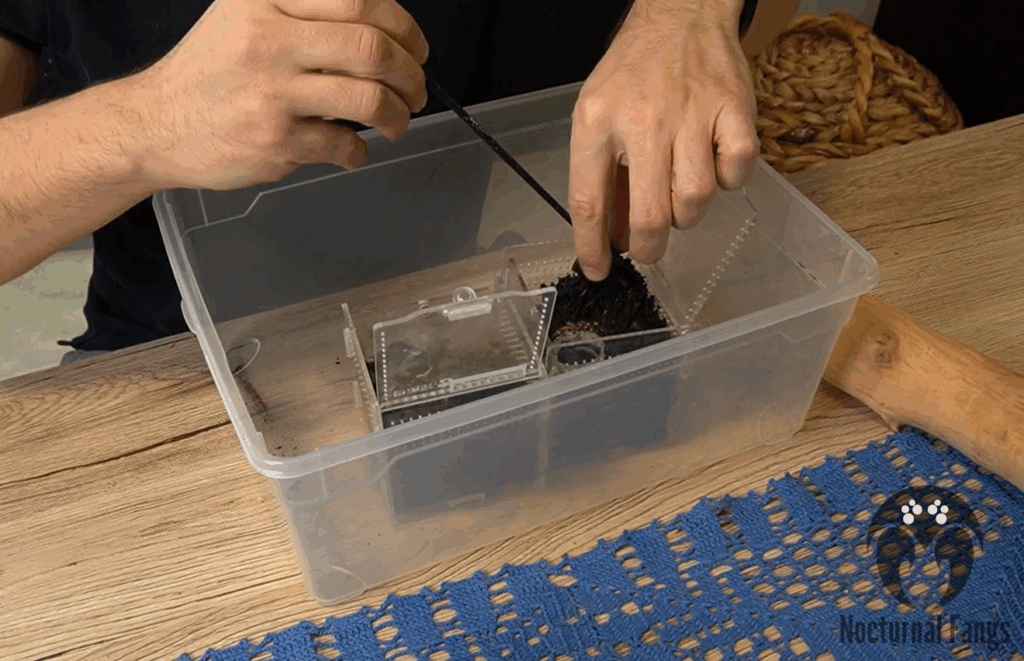
A Rehousing Box
Rehousing tarantulas is always a stressful time, especially if you are rehousing a bolty animal. For that occasion, I like to use a plastic box as an outer container for the two enclosures that I am working on. Using that, you have a little bit more time to use a catch cup, in case your animal decides to run for freedom. In most cases, however, the tarantula will just sit in a corner of the rehousing box, which makes things easier go get back under control.
Final Note
These tools are not about luxury. They are about safety, efficiency, and animal welfare. Long tongs keep fingers safe, syringes make watering slings easier (and avoid floods), and catch cups save you from heart attacks. Thermometers and hygrometers help you maintain stable conditions, and a label maker keeps your growing collection under control.
Every one of these items makes husbandry smoother, more precise, and less stressful for your tarantula. The result is a healthier animal, a calmer keeper, and fewer “why is my spider on the ceiling again” moments.
You do not need to buy everything at once, but starting with the basics will make your life a lot easier. Over time, you will build a little toolkit that fits your style and collection.
Share this page
Enjoyed this page?
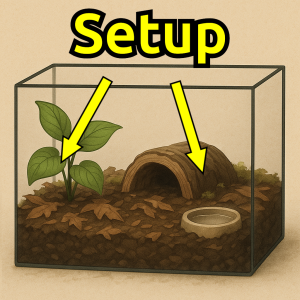
Easy Tarantula Enclosure Setup GuideThe Enclosure as Its Own Small-Scale Ecosystem The distribution, habitats and ecosystems of tarantulas is just as diverse as our eight-legged friends themselves. You can find them in the Americas (NW), Asia (OW), Africa (OW) and Australia (OW) living in holes in the ground (although not so much Hobbit-like), roaming the earth overground, living on trees and between bark folds and making themselves their home within brambles in the brushland. Each of those ecosystems comes with it’s own climate and microclimate, and the better we are able to recreate their natural environment, the higher the chances that our spider will thrive. Enclosure Setup Type The Terrestrial Enclosure Ground-dwelling species like the Brachypelma hamorii or the Acanthoscuria geniculata, just to name a few, will mostly enjoy an enclosure with a moderate amount of soil. Just enough that they have the opportunity to burrow their own hide and just enough that there …